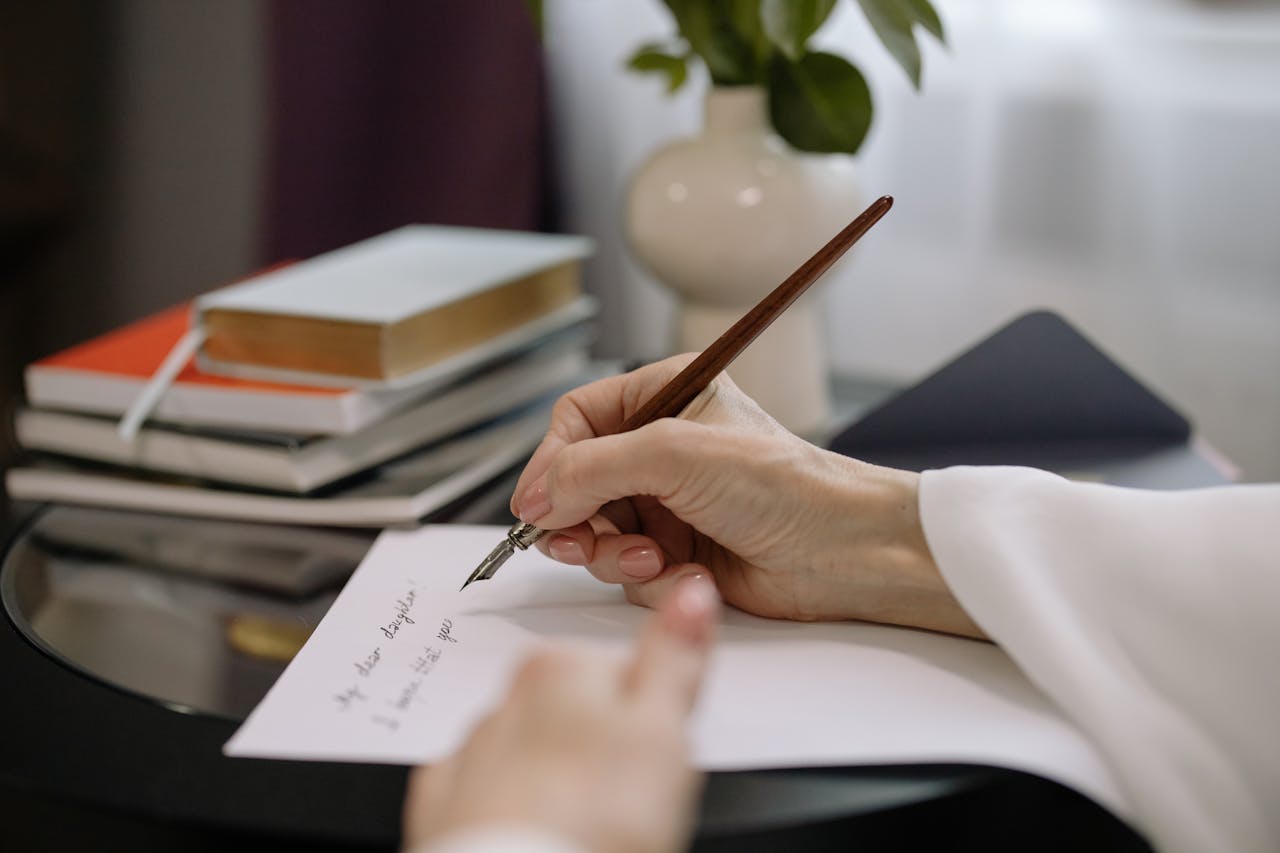
Lost and Found I brush my teeth and notice the faint hangover chirping like a smoke detector inside my frontal lobe. I pop three Advil, switch on the radio, brew some shade-grown free-trade Costa Rican light roast. As I wade through the lingering tufts of last night’s fog, I make out two flashing neon words: Belly Dancing. Belly dancing? Had I really agreed to take lessons from some dreadlocked dude, the proprietor of a so-called alternative dance studio? I recall how he complimented my “gorgeous umbilicus” and “flower-like torso.” I humored him because he was one of those handsome hippies with some seriously homegrown mojo. Plus, my friend, Chardonnay Charles, was mercilessly egging me on. So I took the dude’s business card, and as he whispered his name, Echo Jazzerus, nearly tasting my earlobe, I asked him to repeat himself, and he did. Guess he didn’t get my joke. Whatever. I wipe these events with the crumbs from my kitchen counter and face my current nemesis: the pie crust. I have a crate of plump, ripe peaches I picked at Little Tree Orchards, and I’m making a pie for my boyfriend’s mother, Deb, who’s been under the weather. Deb lives a few towns over in not-quite-enlightened-and-couldn’t-give-a-flying-fuck Watkins Glen with the retired Teamster third husband she keeps in line with a couple sideways glances. On her five acres, she grows the biggest, tastiest tomatoes I’ve ever seen or tasted, and she won’t ever let me leave without piles of her fresh-picked goodies. She breeds golden retrievers too, has photos all over the fridge of me and Robbie cuddling the puffballs. She’s the boyfriend’s mother who thinks you’re the best thing her son’s ever gone and done. And she’s absolutely right. Even though I’m a pretty good self-taught cook, I’m, unfortunately, a capricious baker, easily frustrated by all that confectionary hocus-pocus. So I practice creative visualization: summon a finished pie, relish its sweetly piquant, cyclometric, allopathic perfection. Because I’ve given up on the tree-hugging cookbooks and their sorry cardboard pastry, I turn to recipes compiled by military wives, their “Four Star General Pie Crust.” I’ve got cold butter, ice water, bleached white flour, tub of Crisco. A secret ingredient—distilled white vinegar—promotes flakiness. I cut the fat into the flour with a steel-wire hand-held tool, digging, rocking and rolling through the bowl. Careful not to overwork it, I mold the dough into a neat, round lump. I wrap it with plastic and stick in the fridge to rest, as the cookbook helpfully recommends. Day off! Outside, the street bustles with commuters and delivery trucks. It’s Tuesday. I march up the sunny sidewalk, backpack slung over my shoulder. I love having the day off when everyone else is working. It makes me feel special, a little guilty, even, like I’ve been hoarding all the get-out-of-jail-free cards in Monopoly. In the two years since I’ve graduated college, I’ve worked in restaurants, and now, in human services, where I do 24-hour overnight shifts, at least one per weekend, at a psychiatric group home. So for me, the idea of Saturday and Sunday as a pair, a package deal, seems as distant and abstract as the two goldfish my daddy won me when I was five. Sunday lived for three weeks, and a few days later, I discovered Saturday, belly up. I mourned him less because I assumed life in a glass bowl had been unbearable without a friend. I head towards the South Hill trail, the woods, quiet. My job at the group home is so emotionally intense that sometimes, on my day off, I just want to be left alone, don’t care if I see another living soul. Besides Outlaw that is, who’s in his favorite spot, the stone ledge above his sidewalk. He’s a beautiful tortoise-shell tabby, and as I pet him, he shows me his stomach, purrs heartily. His right eye, cloudy and blind, reminds me of the stone in a mood ring. I wonder if he sees only one-winged butterflies, two-dimensional rodents. “I’m gonna catnap you, Outlaw,” I tell him. I want a cat, but my boyfriend is highly allergic. My last cat, Zack, died of feline leukemia. Back then, sneezing Robbie was kind as I sat Shiva, but now, as Outlaw rubs his head into my palm, I consider: if Zack hadn’t died, whom would I have chosen? Cat or boyfriend? Soon I’m hiking the narrow paths along the gorge, noticing trillium among the buttercups, purple aster in the stinging nettle. A doe tiptoes through the fern-and-skunk- cabbage underbrush. She stops and looks briefly at me before galloping off. I descend lower and lower until I reach a swimming hole fed by a waterfall. I strip to my old red lifeguarding tankini. Floating on my back in the cool dark pool, I look up the terraced cliffs, shelves of glacial shale; where they’ve eroded, the trees cling to jaggy edges. After my swim, I exit the woods and take a short-cut downtown, still pulling on my shirt, wringing my damp hair. I slip on my disguise, a pair of Jackie-O sunglasses that take up half my face, smile at the Buddhist monks in burgundy robes walking to and from their monastery, wonder if under the folds, their chests are as smooth and shiny as their heads, if they wear boxers or briefs or simply holy free-ball it. Two of my clients from the group home, Frank and Maureen, the house couple, recognize me despite the glasses, wave wildly from across the Commons. They’re so happy to see me on my day off! I feel flattered, gracious, and so accompany them over to the Mental Health Building to pick up Frank’s disability check, Frank chattering away about the steak dinner he’s gonna treat Maureen to. Then I buy an overpriced sandwich—hummus, avocado, sprouts—and spread my towel in Dewitt Park by the war memorial. I eat, read, and zone into the cumulus cover. Though they appear still, I watch the clouds long enough to realize they’re progressing ever so slightly, like giant white snails across the sky’s cornflower. * Later, I stuff a puffy sack and drive it over to the Fall Creek Laundromat. I like this one best because there’s a perky old lady who sweeps the floor, empties the lint, gives change, calls me “Hon.” Before I moved in with Robbie, laundry was romantic, a date even, but now I don’t wait for him to come to his last clean pair boxers, even wear dirty ones again, inside out. I often take responsibility for the sheets and towels, items to which guys attribute a Trekkie cloaking device, some kind of shield against grime. I spread my clothes into two machines, lights and darks, and while they chug and spin—because no one steals drenched clothes—I run by the bank and the post office. While my stuff tumbles dry, the laundry lady and I watch ThePrice is Right, calling out bids, like I did with my grandmother on days I stayed home from school sick. I peruse the community bulletin board—“Two cellos! New, with Cases! Might trade for van/car/truck” and think, maybe the owner of the “’89 Sonata, 150K” needs a cello. Or maybe the cellist would take “a thoroughbred gelding rescue with positive attitude and papers.” As Beatrice gazes beseechingly from the poster, I wish I had a farm. Or even a room on Cayuga Lake, like Doug, who scribbles, “I’m chill, the room is chill, and you should be chill,” above photos and a fringe of phone numbers. I tear one off just because no one has, think maybe I’ll start a trend. Like those house cleaners with their “eco-friendly products!” Or the members of “Sexual Compulsives Anonymous,” who tack their pamphlet strategically next to one bearing the slogan: “Discover the Sacred Power of Tantric Love. He who realizes the truth of the body can come to know the truth of the universe.” Hell, they might be on to something. After examining the posts as if they’re tarot cards, I riffle through a lost and found box under the folding counter. There’s a miniature black umbrella that resembles a mangled bat. One long yellow soccer sock. I’m fingering the teal-and-brown-striped wool Banana Republic scarf that I’ve had my eye on for nearly six months, thinking about how in all the lost and founds I’ve canvassed in my life, I’ve never once discovered the actual thing I misplaced or left behind. On my way out, I drape the scarf over my shoulder, deciding to borrow it for a while. It’s what Karen would do, I reason. She’s my Australian nanny friend who speaks with a soothing, melodic lilt—Olivia Newton John meets Mary Poppins. Karen’s overstayed her visa by years, not that anyone’s counting, not me nor her dozens of other admirers or, luckily, my government. Which only seems right, as Karen is a good citizen, contributes the necessary intangibles “real” Americans can’t be bothered with. She feeds the parking meters of strangers. She buys an old Volvo for a hundred bucks, drives it to the Arizona desert, and returns on a Greyhound, bearing roadrunner feathers and sage bundles. She leaves little drawings—lovely, quirky beasts—under my coffee mug or windshield wipers. I figure if someone like Karen is my friend then I must be all right. When Karen and I have the same day off, we wander around as if on some massive scavenger hunt. Just last week, we stopped by the antique store to sift through old postcards of Lake George, San Francisco, Yellowstone, Buffalo. I recited the gracious, careful script: “Six hour delay on train—cattle on tracks!” And “The weather has been splendid, the sights memorable, but without you, my love, the heart is empty.” We talked about the days when people rode trains, wrote love letters, and felt like historians, voyeurs. Sometimes I think a day off is like a found object, something to stumble upon and pick up. Like that diamond wedding ring that years earlier, when I was in college, twinkled on the ground beside my car in a grocery store lot. I admit, at first I tried to pawn it. I was paranoid that the pawnshop owner thought I stole it, so I gave him an alias, and he wrote the $200 check to my friend in Seattle. Only after scheming ways to cash it did I allow myself to think about the poor woman who dropped the ring. What if she was a widow, and the diamond the only tangible symbol of a blissful—or worse yet, tepid and tedious—union? What if it was all she had left of the motherfucker? So I returned the check to the shop, told the truth, and brought the ring to the police station. Three days later, someone claimed it. * Good karma, I figure, is like donating your nest egg to an Easter hunt. It’s finding a rabbit under the full moon and letting him keep his left hind paw. Bad karma is (brazenly) tossing a known recyclable into the garbage. Bad karma seals envy, anger, and lust into canning jars. Bad karma is a mosquito. Good karma is a mush dog. Or maybe, generally speaking, karma is a checking account: regular, modest deposits among occasional hefty overdraft charges. If so, do good deeds and bad intentions sort of cancel each other out? I’m keeping track, at least, I think I am, but the details of my sins, omissions, and random acts of kindness often melt into each other like the faces of all the guys I made out with in college. Or like the kaleidoscope of mismatched socks I’ve spread out on my comforter. As I fold the rest of my Downy-fresh thrift store wardrobe, I’m aware of the sun creeping westward, its rays like golden ears of corn. I should be happy that I have the rest of the day to enjoy, and maybe it’s just the slight chill in my basement apartment, but I can’t shake a premonition of sadness, boredom, and loss. Like those Holy Days of Obligation as a kid when we had no school but were expected to go to church, but because my parents worked, I spent the day worrying about my soul—the genie I imagined seeped through my bones. Today my soul seems more like this musty basement apartment. Now I worry about dust, gas leaks, mold. I fret that everyone else in the world, everyone besides me, that is, seems to have found his or her calling. Even freaking Robbie, who thinks of himself not as a pizza urchin but as a potential Voice for the new generation of banjo-playing-hemp-wearing-literary-terrorists. This past spring, I tried looking into graduate programs in social work, in disciplines dealing with crazy people. But when the weather got nice, I shoved the glossy brochures on top of the take-out menus in the junk drawer, rationalized that my lack of follow-through must have larger, even cosmic origins. I had my astrological chart done by a masseuse I knew from the bar. As her elegant, bony finger traced Neptune’s path through my ninth house, she explained that I have inclinations for professions dealing with: occult matter or mediumships, religion, seafaring, martial arts, acting, psychometry, clairvoyance, painting, poetry, mysticism, and espionage. “Well doesn’t that just take the biscuit,” I said. Secretly, though, I couldn’t help think the list was kinda cool, and at the very least, fucking priceless. * Sometimes a day off is like a leash attached to a collar, and out of nowhere, I start worrying about the group home. Will Kate remember to buy soy sauce for my signature tofu dim sum? Will my client, Maureen, forget to ask for her 3 p.m. meds and have a crisis? I say fuck it, call over. My boss, Wendy, recognizes my voice at hello. We bullshit for a few minutes, gossiping about people we don’t like and people we do. After I hang up, I feel like a bonafide member of the secret social worker network (we put the fun back in dysfunctional!). Outside my window, an idling car plays an Eagles song. Though it’s one I’ve never particularly cared for, I still know every word. Like the saved message on the answering machine, some Carla calling for my boyfriend. Her pithy lilt is nonchalant yet hopeful, like some Christian rock groupie. Though I’m tempted to erase it, I don’t. Instead, I light my homemade candles, colorful layers of wax that smell like vanilla, honeysuckle, rose. They look like exotic tropical drinks do—hurricanes, rum punches—before they’re shaken and stirred. * As a full-time employee in the “real” world, I’ve noticed that the workday, similar to the school day, has its own rhythms and routines, and that perhaps “drones” like me try to instill that structure into our leisure. I don’t have to be psychic to see that there are patterns I can predict, truths I should get yet continue to resist. The earth will tilt. Leaves will fall. I will sweep them, shriveled like the skins of persimmons, apples, and mangos. Snow will settle on pumpkin heads, porch railings, welcome mats. I’ll pack it into tunnels, and bundled in my fake fur coat, striped scarf wrapped around my throat, hustle to the food co-op for kale, potatoes, or quinoa. Along the way, I will stop in on my friend James, an old co-worker from my restaurant days. He’ll still be selling “therapeutic magnets,” one of those damn pyramid schemes. Since he isn’t moving many magnets (I feel sorry for him for being so gullible), I’ll find him in his kitchen, simmering a rich miso, a wild mushroom risotto. He’ll feed me lunch as I complain about my boyfriend—he’s been staying out half the night with his restaurant cronies. James is a sensitive guy, and he’ll listen attentively, possibly imagining my willowy contour on his magnetic mattress. But no, he’s just a friend; we keep each other’s secrets. He’ll tell me how when he dated this pretty college girl, a waitress, they had the most amazing sex one night was on her period. She went wild so he did too, he’ll say, describing the bloody handprints he left on her skin. Amazed, maybe even a little jealous, I’ll imagine rust-colored whorls like fossils in sandstone. I’ll seek out other warm places—the public library, where I’ll check out too many books about gardening, the solar system, semiotics; the arts theater, where I’ll weep at foreign matinees, gorging myself on Twizzlers and popcorn. I’ll hibernate in my own kitchen, prodding bread dough, chopping vegetables for minestrone. When I taste from the wooden spoon, I’ll think that the only person who really understands me is dead. My Sicilian grandfather loved to cook, and when Grandma called him lazy or a ne’er-do-well, he ignored her, dishing out steaming plates of food. And because sometimes, a day off is like a good meal—warm, fragrant, and nourishing—I’ll invite friends over to mangia. My boyfriend likes having people over, likes showing off his Brautigan first editions and Dylan bootlegs. And somehow, my modest dinner will turn into a full-blown dance party: Grateful Dead meets Destiny’s Child. Maybe it’s the magnums of wine, stuffed jalapeño appetizers, or the latest weeklong blizzard, but even my boyfriend, a reluctant dancer, even he will let loose, get sucked into the throbbing mass of groove. It will be around this point in the season that I begin my doomed and reckless affair with the local weatherman. It will start off innocently enough, with calling time and temperature each morning and evening, and progress into a morbid curiosity with negative digits and pressure systems. Next thing I know, I’ll be stalking the meteorologist through my little 13-inch television, hanging on every word as he points to the swirling map, to the cold front clasping the Southern Tier like a bear trap. I’ll shiver through stories of people dying in disabled vehicles. I’ll wear thermal underwear at all times, even if I don’t intended to step foot outside, and mope around feeling lonely and bereft, like a cat lady without her cats. I’ll fail to note: a good way to induce, rather than avoid, stir-craziness is by doing a couple bong hits and cleaning the apartment. I’ll dust each and every geode, picture frame, and sequoia pinecone, and even the gold pipes along the perimeter of the ceiling. The pipes are like veins outside the skin, warm with heat. Because cleanliness is godliness and I want to find God, I’ll rub furniture polish into the wood floor, pretending it’s the sacred belly of Buddha. I’ll even tackle the fridge: decaying pizzas in cardboard tombs, odd leftovers breeding colonies. I’ll sort through the pile of bills on the kitchen table, pay a few, and make a separate stack of cards and letters, re-reading them under the guise of organizing. There’s nothing like snooping around in your own past to remind you of someone or something you’ve lost track of. Then it’s on: a two-hour search for a South African coin pierced with a bullet hole. My high school boyfriend’s grandfather’s. I’ll sort through tarnished silver hoops, Celtic knots, beaded chandelier necklaces with broken clamps, a whole shit-load of buttons. I’ll grow frantic, trying to envision the last place I saw it—at my parent’s house, in my old Formica desk?—but will come up blank. When my day off threatens to become a sulk, a pity-party for one, I’ll give up. I’ll shower until the hot water runs out. Afterwards, still fuzzy from the marijuana, I’ll laze on my bed, wrapped in a towel, and as steam wafts out the bathroom, conjure a guy or two I came close to sleeping with. Like the soccer player with eyes black as Calamata olives whose twin dormitory bed I once spent the night in. His tight, naked form over me. My body nearly levitating with desire. But we didn’t do it then, or ever. I was testing him, wanted to make sure he really liked me first. Now my little tests will seem so idiotic, useless: I should’ve gotten some while the getting was good. And in my dim winter afternoon bedroom, the memory of almost will just have to do. * Sometimes the day off exists only for the night. My boyfriend and I will head downtown to meet friends at the bar. The hooks on the wall will be piled with coats and parkas, and I’ll throw mine on top. I’ll keep my scarf, let it hang loose around my neck as I play game after game of darts. Robbie will be sitting with the wanna-be-poet-crowd. In between launches, as I sip my beer, I’ll catch snippets of their conversation (a debate about what would best follow the line, “If I could yodel out my asshole”). I’ll know I’m half-crocked when the jukebox music fades in and out like an ice cream truck, reminding me of the days my grandpa pressed a dollar, soft and greasy as a pigeon feather, into my outstretched palm. I’ll squeeze my boyfriend’s elbow, tell him I need to go home, and he’ll barely turn from his conversation to make sure I have my key. Halfway out the door, I’ll glance back, catch his slouching frame topped with his favorite ratty cap, and I’ll wonder how and why it is we don’t seem to even like each other anymore. The sidewalk will swarm with college kids, playing a barhopping game they call beer golf. My scarf will smell like cigarette smoke. I’ll be walking up the hill when I’m literally and visibly jolted by a honking horn: a carload of frat boys’ catcalls. My cheeks ablaze, I’ll look straight ahead, slip a key between my knuckles like a shiv, bite my smile. * A crocus will splash its bright Bordeaux against the snow. Icicles will drip into puddles. I’ll walk two miles to Stewart Park, on Cayuga Lake’s south shore, find the gulls that never left home. The air will feel like damp wool around my throat: something to shrug off, to drop in the Goodwill box. I’ll sort through the junk and recycling piled in the mudroom, which I’ll take one of my unofficial favorite places: the city dump. I feel sorry for dumps, think their negative reputation in the popular imagination is totally unfair, completely unearned. My dump doesn’t smell—it’s a pleasant place. After weighing my car on the scale, a friendly man will help me unload, then rake my rubbish toward a compactor. I’ll weigh out, pay two bucks, feel lighter. I’ll finally return my library books too, chalking the fines up to the remaining deductible of Seasonal Affective Disorder. On a quest for chlorophyll, I’ll pick asparagus with my friend Jen at a local farm. For days, we’ll purée bisques, fill crepes, and wrap spears with "fake-un-bacon.” When my pee is the color of antifreeze, I’ll think my body’s been hijacked by aliens, that I’ve acquired some rare deficiency or virus before realizing it’s from eating all that asparagus. A newfound empathy toward the vegetable kingdom will rouse me to repot my houseplants. I’ll pinch the baby shoots, plantlets, from the mother Chlorophytum comosum, a common spider, and put them in glasses to root. I’ll separate clusters of the Sansevierta trifasciata—snake plant— its long green spears speckled like watermelons. I like these hardy plants because they are impossible to kill. I always manage to drown my jades, even when I think I’ve been ignoring them. Summer will come only when I’ve stopped expecting it. Suddenly, one day, the air will be the hot side of warm, the irises will have unfurled. I will exercise every chance I get, rediscovering parts of me that have, for months, laid dormant. I’ll hike up Cascadilla Gorge until my calves burn. I’ll wade out to a rock in the middle of the streambed, close my eyes, listen to the falls rushing, tinkling, frothing, and think they are trying to tell me something. But the closer I listen, the more it will sound like nothing, nothing, nothing. * But before all this can happen, I must first finish the August day I’ve started: I must bake one badass peach pie. Though I’m running out of time, but because I want to do it right, I pop downtown to buy an oven thermometer. And since the farmer’s market is set up along Cayuga Street on Tuesdays, I buy a bouquet of wildflowers for Robbie’s mother. Milk-white daisies, fuchsia snapdragons, purple pearls of lilac, bouncy orange zinnias, one bashful sunflower, and something I can’t identify: wine-colored petals curled in tight funnels. It reminds me of those pop-up crepe paper centerpieces. The vendor says it’s called “aurora’s kiss,” a type of dahlia. I love that name, repeat it to myself as I sit on a bench, drinking an iced coffee, watching shadows of leaves play across the pavement. When a policeman approaches me, I’m not alarmed—working in a group home has confirmed that cops are indeed my friends. This guy has a bushy moustache, the kind you don’t really see anymore, the kind that takes courage, the kind that screams Sonny Bono, Ned Flanders, Magnum, P.I., Friedrich Nietzsche. I look the officer in the mouth, fixate on a stray crumb, wondering if his hidden lip is pale as a parsnip, if it’s full and voluptuous. I wonder how it would feel to kiss him—Bristly? Ticklish? Soft? But the cop, he just asks if I’ve seen a large commercial dump truck driven by a teenage boy barreling down 96B. I haven’t been watching the traffic, I apologize. (I did see a chubby squirrel abscond with a Cheeto, but I keep this to myself.) If only I was paying attention, I might have witnessed a real, live crime! Back home, after arranging the flowers in a vase, I finally get to work on the pie, slicing the peaches into thick crescents, sampling a few to make sure the peaches are good, and in fact, they’re amazing. I add sugar, lemon juice, pinches of cinnamon and nutmeg, and even dissolve some cornstarch—this, I hope, will prevent the filling from being runny. I flour my hands, roll the out dough, and drape it over the pie plate. After adding the fruit mixture, I seal it, crimping the dough along the edges. I brush it with beaten egg yolks, carve vents in the center—five petals—and set it in my precisely preheated oven. While it bakes, I write letters to old friends in faraway places. Sure I miss my friends, but the real reason I write is to solicit responses. I love getting mail. In these impassioned, meandering missives, I am careful not to reference their recent or long ago abortions, arrests, or eating disorders. I don’t inquire about the cost of grad school or rehab, weddings or in vitro. I don’t ask how corporate America has been treating them, and what they do to hide ankle tattoos or empty face piercings. Or what it’s like to suddenly be bi-sexual. This is all the dirt reserved for drunk-dials. On my pretty strawberry-bordered stationary, I simply cast a silk line with a candy hook, asking about their lovers, dogs, and ferrets, their new Ikea furniture and Honda Civics. I tell witty group home anecdotes, propose reunions, mention the “aurora’s kiss,” and try to describe the scent of my baking pie: a chapel filled with Aztec gold plumeria; a jar of jam first opened; a butter cookie-scented candle. I write letters because they are a release, and if I’m jealous that they moved to exciting cities after college while I stayed in the same boring town, I don’t let on, just let my pen tumble, because no matter how silly or random or half-honest I am, I know my friends will still love me. The pie is a golden wonder, like clay impressions of Moroccan dunes fired in a kiln. The edges of the vents glisten with caramelized sugar. I put it on the counter by the window to cool. It’s not a windowsill but will have to do. My kitchen window has been painted shut. * The next day, Wednesday, Robbie and I drive the pie and flowers along Seneca Lake to his mother’s trailer home in Watkins. Deb’s been through a round of radiation and chemo, and wears a wig that so closely resembles her own sandy gray hair, always pulled back with two sparkly Bobbie pins, that I want to touch it to make sure it’s not. She’s only fifty-one, and I always thought she looked trim, athletic, young, but now she’s a gaunt skeleton in a fuzzy pastel bathrobe. I know from Robbie’s sister that she hasn’t been eating, and that’s why I made the pie: I thought I’d make one so good she wouldn’t be able to resist eating just a little. Deb gushes over my pie, assures us she’s feeling better, that the doctors think they’ve zapped it. I think about those electric blue lights in mesh cages on every porch in my childhood suburbs, how as I played outside on summer evenings, I’d sometimes hear an especially drawn out crackle—some juicy insect frying up. When she slices the pie, I’m ecstatic that each slice stays together, a pocket of crust around stacked sunset-colored peaches. She insists on getting a gallon of vanilla ice cream from the garage freezer, and her husband, John, tells her to relax, sit, he’ll fetch it. But she’s already out the door, and in those few moments, John tells us she’s a fighter, that they’re gonna beat this thing, and as he makes a fist, a faded bald eagle shivers over his tense muscles. At the kitchen table, Deb asks us about our jobs. Two golden retrievers somberly guard her chair. She takes turns petting each of their heads, and I notice how skinny her wrist looks. Usually we’d all be smoking cigarettes and drinking coffee, but now no one smokes, and she takes dainty sips of chamomile. The pie is delicious, by far the best I’ve ever made, even tasted, but she doesn’t have any, tells us to eat up—we’re growing kids!—and promises she’ll eat some later, her stomach always settles a bit after supper. And on another day off, eight months later, a few weeks after the ground thaws and we return Deb to the earth she came from, I’ll be sorting through my bills and find her card. On the cover is a farm scene: a few chickens, a fluffy dog, a vegetable garden, and a girl with a watering can. And inside she’s written: thanks for the company, the flowers, and, most of all, the pie. I’ll prop the note between two candles and a large pink seashell, eventually move it to a shoebox where it will rest till, well, till right now.
Kristen Keckler was born in the Year of the Ox. She is currently a Lecturer in English at the University of North Texas, and her work has appeared or is forthcoming in: South Dakota Review, The Iowa Review, Ecotone, Sport Literate, The Sonora Review, Cold-drill, Concho River Review, Palo Alto Review, Flashquake, and The Dallas Morning News. She also recently collaborated with Bill Roorbach as co-author of the revised 10th Anniversary Edition of the nonfiction craft guide, Writing Life Stories (Writer's Digest Books). She loves Texas winters almost as much as she hates losing her umbrellas.
© 2009 prickofthespindle.com |
||
|